
Rolex Daytona

$39,950.00
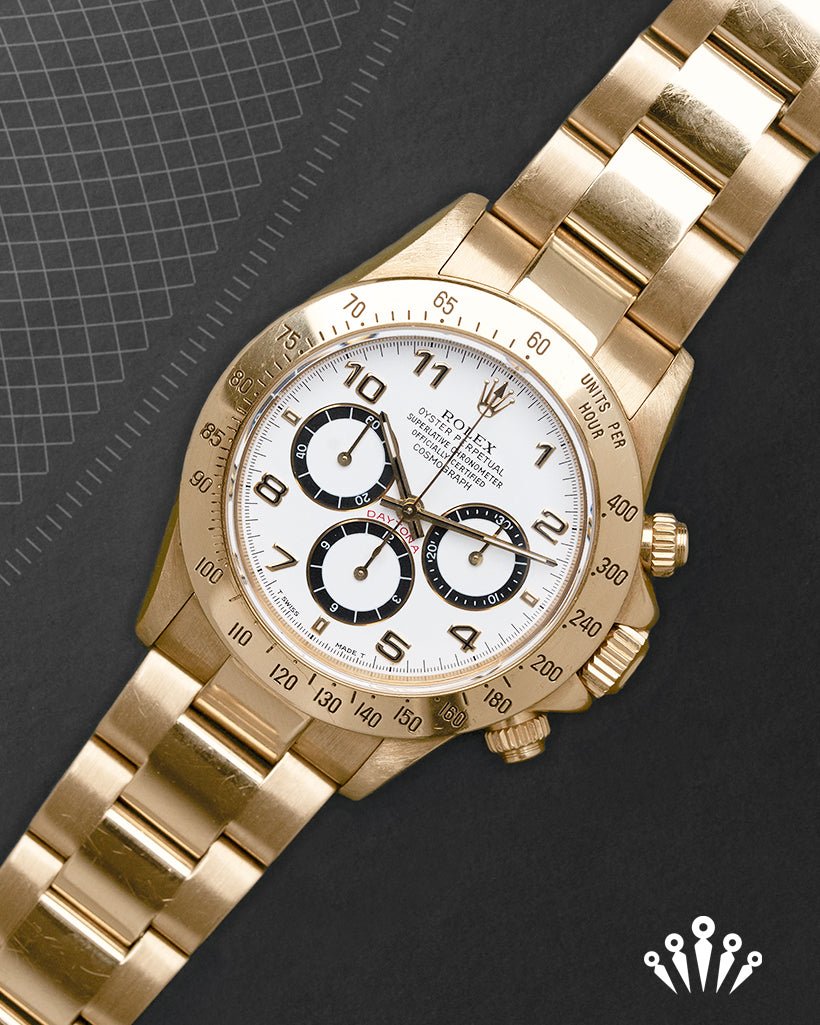
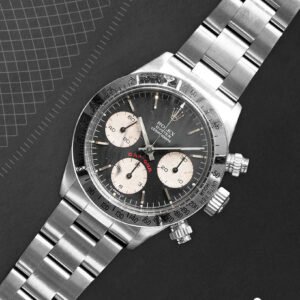
A rare 1993 Rolex Daytona reference 16528 in 18ct yellow gold, featuring the sought-after inverted-six dial, sapphire crystal, automatic calibre 4030 and matching Oyster bracelet. Historically significant, technically compelling and offered at £39,950, this full-gold Daytona is a standout addition to any serious Rolex collection.
Overview
This 1993 Rolex Daytona reference 16528 is an especially important and desirable example of Rolex’s legendary automatic chronograph. Presented in 18ct yellow gold and paired with the corresponding solid-gold Oyster bracelet, it combines the unmistakable sporting character of the Daytona with the precious-metal presence that has made this generation so sought after by collectors.
Its white dial is defined by black-ringed subsidiary registers and the distinctive inverted six at six o’clock. Protected by sapphire crystal and powered by the Zenith El Primero-based calibre 4030, this Daytona represents a pivotal chapter in the model’s development: the first self-winding generation, introduced as the successor to the manually wound Daytona. Offered at £39,950, it is a compelling opportunity to acquire a historically significant Rolex chronograph in one of its most recognisable configurations.
For collectors building a considered portfolio of Rolex watches, the reference 16528 has a particular appeal. It is sufficiently modern for practical everyday use, yet sufficiently distinctive and historically meaningful to occupy an important place in a serious collection.
Brand and reference history
The Rolex Daytona is one of the most celebrated sports watches ever produced. Its association with motor racing, precise elapsed-time measurement and the professional world of endurance competition has given the model an identity that extends far beyond its technical specification. Since its introduction, the Daytona has evolved through several important generations, each adding to the mythology of the name.
Reference 16528 belongs to the second major generation of the automatic Daytona. Introduced in 1988, it was the yellow-gold counterpart to the steel reference 16520 and marked a decisive change from the manually wound movements used previously. Rolex adopted the high-frequency Zenith El Primero as the foundation for its calibre 4030, modifying and regulating it extensively to meet Rolex’s standards of reliability and durability.
This transition made the 16528 a landmark reference. It retained the classic Daytona proportions and three-register layout while introducing the convenience of automatic winding. The reference was produced in a range of dial and metal combinations, but the white dial with contrasting black-ringed sub-dials remains among the most immediately recognisable and desirable.
The inverted six is an especially notable feature of early examples. At the six o’clock subsidiary register, the numeral appears upside down in relation to the surrounding numerals. This was a manufacturing characteristic associated with the early production of the dial rather than a deliberate decorative motif, and it has become one of the details collectors examine when assessing examples from this period.
Dial, hands and design detail
The white dial creates a crisp, high-contrast foundation for the watch’s black-ringed subsidiary dials. This contrast is not merely attractive; it also preserves the practical legibility that has always been central to the Daytona’s design. The three registers display elapsed hours, minutes and running seconds, while the surrounding tachymetric scale reinforces the watch’s connection with speed and motorsport.
At six o’clock, the inverted six provides a defining signature of this early reference 16528 configuration. Collectors value such details because they help place a watch within the chronology of its production and distinguish it from later dial executions. On this example, the detail contributes to the watch’s historical character without compromising the balanced, highly legible layout.
The luminous hour markers and hands support readability in changing light, while the polished and contrasting surfaces of the handset help the time remain clear against the dial. The central chronograph seconds hand extends across the dial to the outer scale, allowing elapsed time to be read quickly and precisely.
Behind the dial, the sapphire crystal offers strong resistance to scratching and preserves a clear view of the display. Its use reflects the technological progression represented by this generation of Daytona, giving the watch a more contemporary feel than the earlier acrylic-crystal references while retaining the unmistakable visual language of the model.
Case, bracelet and wearability
The 18ct yellow-gold Oyster case gives this Daytona a level of richness and presence that is impossible to replicate in stainless steel. Its rounded lugs, screw-down chronograph pushers and screw-down crown form the familiar Oyster architecture, designed to provide a robust barrier against everyday exposure while maintaining the watch’s sporting proportions.
Yellow gold changes the personality of the Daytona. The design remains functional and purposeful, but the precious metal introduces warmth, weight and visual depth. Polished surfaces catch the light across the bezel and case sides, while the contrasting brushed elements help preserve the tool-watch heritage of the Oyster case. The result is a watch that can move comfortably between formal and casual settings.
The solid 18ct yellow-gold Oyster bracelet is an important part of the reference’s appeal. It gives the watch a cohesive appearance and provides the substantial feel expected from a full-gold Rolex. The bracelet’s integrated relationship with the case means that it sits naturally on the wrist rather than appearing as an afterthought, while its articulated links support comfortable movement throughout the day.
As with any vintage or neo-vintage precious-metal watch, the condition of the case and bracelet should be considered carefully. Gold is softer than steel and can show signs of wear more readily, particularly around the clasp, link edges and polished surfaces. A properly assessed example, however, offers the distinctive pleasure of wearing a historically important watch with genuine material presence.
Movement and technical specification
Reference 16528 is powered by Rolex calibre 4030, an automatic chronograph movement derived from the Zenith El Primero calibre 400. Rolex made extensive changes to the base movement, reducing its operating frequency, refining the architecture and applying its own regulation and finishing standards. The resulting calibre was engineered to deliver the dependable performance expected of a Rolex while preserving the technical significance of its high-grade foundation.
The movement provides automatic winding, central chronograph seconds, elapsed minutes and elapsed hours, together with a continuously running seconds display. Its rotor winds the mainspring as the watch is worn, making it significantly more convenient for regular use than the manually wound movements found in earlier Daytona references.
The screw-down crown and pushers are central to the Oyster case’s protective design. They help isolate the movement from moisture and environmental exposure, although water resistance on a vintage watch should never be assumed without appropriate testing and confirmation from a qualified technician. The sapphire crystal further supports the watch’s practical character by offering excellent resistance to everyday abrasion.
Its combination of automatic winding, chronograph functionality and robust Oyster construction makes this Daytona more than a display piece. It is a technically engaging watch that can be enjoyed as intended, while its rarity, precious-metal construction and place in Rolex history give it importance beyond its specification sheet.
Sizing and how it wears
The Daytona is known for its balanced rather than oversized proportions. The case presents a confident presence on the wrist, but it does not overwhelm the wearer. Its relatively restrained profile allows the watch to sit comfortably beneath a cuff, while the gold construction adds perceptible heft and a reassuring sense of substance.
The Oyster bracelet distributes that weight effectively across the wrist. Its articulated links allow the watch to follow the natural curve of the arm, and the secure clasp gives confidence during daily wear. Because this is a full-gold model, it feels more substantial than an equivalent steel Daytona; that added weight is part of its appeal and contributes to the unmistakable luxury of the watch.
The dial’s contrast also improves the wearing experience. The white background and black registers remain easy to read in bright conditions, while the chronograph layout gives the watch visual energy without making it appear busy. It is sufficiently sporty for casual clothing yet sufficiently refined for more formal occasions.
For anyone comparing it with other chronograph watches, the 16528 offers an unusually versatile balance. It carries genuine motorsport heritage, but the yellow-gold case and bracelet allow it to function equally well as a luxury dress-sport watch.
Collectability and market value
The collectability of the reference 16528 rests on several overlapping factors. It is a Daytona, one of Rolex’s most internationally recognised and consistently demanded models; it is an early automatic reference; it is made in 18ct yellow gold; and it features the distinctive inverted-six dial associated with early production. Together, these characteristics create a particularly compelling profile for collectors who value both design and historical context.
The Zenith-based movement is another important part of the story. Although Rolex modified the calibre extensively, the movement links this Daytona to the El Primero, one of the most famous automatic chronograph mechanisms ever made. This gives the 16528 a technical narrative that distinguishes it from later in-house Daytona generations.
Condition, originality, service history and the state of the bracelet all influence the desirability and market value of an example. Dial condition is especially significant, as collectors look closely at the printing, finish, lume and preservation of the inverted six. Equally, an original bracelet with good structural integrity can materially enhance the ownership experience and long-term appeal.
At £39,950, this watch represents an opportunity to acquire an important full-gold Daytona with a distinctive early-generation configuration. Market values can change, but the enduring strength of the Daytona name, combined with the rarity and historical importance of reference 16528, gives this model a persuasive place in a diversified collection.
Authenticity, condition and servicing
Authenticity is fundamental when purchasing a collectible Rolex, particularly a sought-after Daytona reference. The watch should be assessed as a complete object rather than judged by one detail alone. Reference consistency, dial configuration, movement, case construction, bracelet, clasp and finishing all contribute to a proper evaluation.
The inverted six is an important and recognised characteristic of this dial configuration, but it should be considered alongside the wider evidence presented by the watch. A careful inspection helps establish whether the visible components are appropriate to the reference and period, and whether the overall condition is consistent with a genuine example from 1993.
Condition should be understood in the context of age and material. A watch from 1993 may display signs of careful use, and minor evidence of wear can be entirely appropriate for a pre-owned timepiece. On a gold watch, particular attention is paid to the case geometry, lug definition, bracelet stretch, clasp condition and the preservation of polished and brushed surfaces.
Servicing should be entrusted to a suitably qualified watchmaker familiar with vintage Rolex chronographs and the Zenith-derived calibre 4030. Any future maintenance should prioritise the long-term preservation of the movement and case. Water resistance, in particular, should be checked professionally rather than inferred from the presence of a screw-down crown and pushers.
Buying this watch from us
Buying a watch of this importance should be a clear, informed and reassuring experience. We present this Rolex Daytona reference 16528 with its key identifying characteristics explained, including its 1993 date, 18ct yellow-gold construction, white inverted-six dial, sapphire crystal, Oyster bracelet and Zenith El Primero-based calibre 4030 movement.
Our role is to help you understand both the watch and its place within the wider Rolex story. Whether you are adding a first Daytona to an established collection or seeking a historically significant full-gold chronograph, we can discuss the reference, its design details, its condition and the practical considerations of ownership before you commit.
This Daytona is offered at £39,950. It is a rare and characterful watch with the presence of precious metal, the usability of automatic winding and the distinction of an early self-winding Daytona reference. It also offers a compelling alternative to other iconic Rolex sports models, including the Rolex Submariner Date, for collectors looking to add a chronograph with greater horological and motorsport emphasis.
If you would like further information about this watch, its condition or the buying process, please contact us. We will be pleased to provide a considered overview and help you decide whether this exceptional reference 16528 is the right addition to your collection.
Frequently asked questions
What year is this Rolex Daytona reference 16528 from?
This example dates from 1993. It belongs to the early automatic Daytona generation introduced in 1988 and is the yellow-gold counterpart to the steel reference 16520.
What movement powers this Rolex Daytona?
The watch is powered by Rolex calibre 4030, an extensively modified and regulated version of the Zenith El Primero calibre 400 automatic chronograph movement.
What is the significance of the inverted six?
The inverted six is a recognised characteristic of certain early Daytona dials from this period. The numeral at the base of the six o’clock subsidiary register appears upside down, giving the dial a distinctive detail valued by collectors.
Is the watch made from solid gold?
Yes. The case and Oyster bracelet are presented in 18ct yellow gold, giving the watch additional weight, warmth and visual presence compared with stainless-steel Daytona models.
Does this Daytona have a sapphire crystal?
Yes. The dial is protected by sapphire crystal, which offers strong resistance to everyday scratching and reflects the more modern construction of this automatic Daytona generation.
What is the price of this Rolex Daytona?
This Rolex Daytona reference 16528 is offered at £39,950. For more information about its condition, specification or purchase, please contact us directly.
Be the first to review “Rolex Daytona”
Related products


Reviews
There are no reviews yet.