
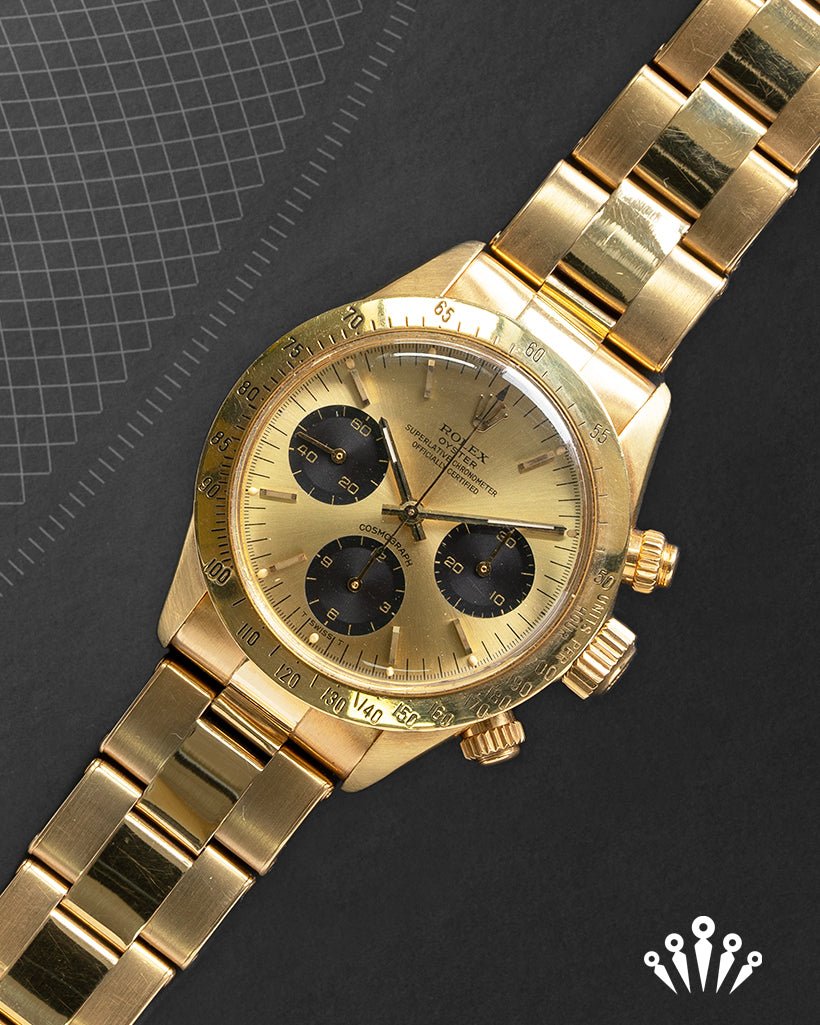
Rolex Daytona


$124,000.00
Acquire a mint 1986 Rolex Daytona Ref. 6265 in 18ct yellow gold, featuring a striking lemon chronograph dial and manual-winding movement. Measuring 37mm, this rare vintage Daytona combines motorsport heritage, precious-metal presence and enduring collector appeal in one exceptional watch.
Overview
This Rolex Daytona Ref. 6265 is a compelling example of a vintage 1986 solid-gold chronograph, presented in mint condition and distinguished by its 37mm 18ct yellow-gold case, lemon chronograph dial and manually wound movement. It combines the unmistakable sporting purpose of the Daytona with the warmth, weight and rarity of precious metal, creating a watch with an unusually strong presence on the wrist.
Few vintage chronograph watches offer this particular balance of technical interest and visual character. The compact case, purposeful three-register layout and gold construction give the watch a discreetly luxurious quality, while the hand-wound architecture remains closely tied to the historic identity of the Daytona. For collectors, this is a period Rolex chronograph with genuine significance rather than simply a modern interpretation of a famous name.
The lemon-coloured dial is central to the appeal. Its vivid tone contrasts naturally with the yellow-gold case and gives the watch an immediate distinction without compromising the legibility expected of a racing chronograph. The result is a vintage Daytona that can be appreciated as both a serious collector’s piece and an exceptionally wearable luxury sports watch.
Brand and reference history
Rolex’s Daytona occupies a unique position in watchmaking history. Developed around the demands of timing, speed and motorsport, the model has become one of the most recognised chronographs ever produced. Its enduring appeal comes from the combination of a clear elapsed-time display, robust engineering and a design language that has remained remarkably consistent across generations.
Reference 6265 belongs to the celebrated manual-wind era of the Daytona. These watches pre-date the later automatic generation and are valued for their direct, mechanically engaging character. The reference is particularly important within the vintage Daytona family because it represents the mature form of the hand-wound Oyster chronograph, combining screw-down elements with the compact proportions that define the period.
A solid-gold Ref. 6265 is especially desirable. Precious-metal examples were made in far smaller numbers than their steel counterparts, and their appearance is markedly different: richer, heavier and more formal, while retaining the unmistakable functionality of the Daytona. The 1986 date places this watch near the end of the manual-wind period, adding historical interest to an already important reference.
For those comparing notable Rolex watches, this Daytona offers a very different proposition from a contemporary sports model. It is smaller, more tactile and more closely connected to the brand’s traditional mechanical methods, making it an appealing choice for collectors who value period character as highly as headline specifications.
Dial, hands and design detail
The lemon chronograph dial is the defining visual feature of this watch. Its bright yellow tone works in harmony with the 18ct yellow-gold case, producing a cohesive monochromatic effect that is both luxurious and unmistakably vintage. Against this background, the subsidiary registers provide the visual structure associated with the Daytona, allowing the elapsed-time functions to remain clear while adding depth to the dial.
The three-register arrangement gives the watch its purposeful chronograph identity. Each sub-dial contributes to the balanced composition, with the central hour and minute hands providing immediate everyday timekeeping and the chronograph indications supporting precise timing. The design remains legible without appearing stark, an important quality in a vintage watch where the dial is expected to carry both function and character.
Gold-toned details complement the case and reinforce the sense that every component was considered as part of a single design. The contrast between the lemon surface, dark markings and polished metal accents gives the dial a lively appearance under changing light. Depending on the angle, the watch can appear bright and formal or deeper and more restrained, which is part of the pleasure of wearing a vintage gold Rolex.
The hands are proportioned for the compact case and help preserve the visual clarity of the display. The central chronograph hand adds a fine, precise line across the dial when the timing function is in use, while the subsidiary hands provide an additional layer of detail. Together, these features create a dial that rewards close examination without losing its instant recognisability from across the room.
Case, bracelet and wearability
The 37mm 18ct yellow-gold case gives this Daytona a substantial material presence while retaining the restrained dimensions of its era. Measured by modern standards, it is compact; however, the combination of the round case, integrated lugs and bright precious metal allows it to wear with considerably more authority than the diameter alone might suggest.
The case design is characteristically purposeful, with chronograph pushers and a winding crown arranged to support the watch’s timing functions. The gold surface captures light across its polished and shaped areas, creating a changing profile as the wrist moves. This is not an oversized sports watch, but it has the visual density and tactile weight that many collectors associate with an exceptional vintage Rolex.
The bracelet completes the precious-metal presentation. In combination with the case, it creates a seamless transition around the wrist and gives the watch a more luxurious, integrated appearance than a strap-mounted chronograph. The bracelet also contributes to the watch’s balance, helping the case sit securely and comfortably rather than feeling top-heavy.
Mint condition is a significant part of the appeal here. Vintage gold cases can lose definition through repeated polishing, particularly around the lugs and case edges. A well-preserved example retains the crispness and sculptural quality that make the reference so attractive. The condition noted for this watch means its proportions and surface character can be appreciated as part of its collector value, not merely its age.
Movement and technical specification
Powering the watch is a manual-wound mechanical movement, an important characteristic of the vintage Daytona experience. Rather than relying on an automatic rotor, the movement is wound by hand through the crown, creating a direct and engaging relationship between owner and mechanism. This ritual is one of the reasons collectors continue to seek out hand-wound Rolex chronographs.
The chronograph mechanism allows the wearer to measure elapsed periods using the central seconds hand and subsidiary displays. Operated through the case pushers, it brings practical timing functionality to a watch whose design was originally shaped by the requirements of motorsport and precision measurement. The mechanical action of starting, stopping and resetting the chronograph is a particularly satisfying aspect of ownership.
- Brand: Rolex
- Model: Daytona
- Reference: 6265
- Year: 1986
- Case material: 18ct yellow gold
- Case diameter: 37mm
- Dial: Lemon chronograph dial
- Movement: Manual-winding mechanical chronograph
- Condition: Mint condition, as noted
The compact dimensions and hand-wound movement place this watch firmly within the classic vintage Daytona tradition. It is a technically interesting object as well as a luxury accessory: a watch whose operation, proportions and construction reflect the period in which it was made. As with any vintage mechanical chronograph, careful ownership and appropriate professional maintenance are important to preserve both performance and originality.
Sizing and how it wears
At 37mm, this Daytona offers a notably different wrist presence from many contemporary chronographs. It sits close to the wrist and presents a clean, balanced outline, making it suitable for collectors who appreciate traditional proportions. The gold case and bracelet add visual and physical substance, so the watch does not feel slight despite its modest diameter.
The compact case is also highly versatile. It can be worn with tailored clothing, where the yellow gold and lemon dial feel naturally elegant, yet it retains enough sporting character for more relaxed settings. The chronograph layout prevents the watch from becoming overly formal, while the precious-metal construction elevates it well beyond the category of an everyday steel sports watch.
Wrist comfort will depend on individual preference, but the combination of a 37mm case and bracelet construction generally makes for an unobtrusive fit. The watch is easy to read at a glance and does not dominate the wrist in the manner of a larger modern chronograph. For collectors accustomed to vintage sizing, its proportions will feel immediately natural; for those used to larger cases, the gold weight and strong dial colour provide ample presence.
Its versatility is further enhanced by the dial’s colour. Lemon yellow gold can look vivid in bright light and more subdued indoors, allowing the watch to shift character throughout the day. That changing appearance is a hallmark of a successful precious-metal vintage watch: distinctive enough to be memorable, yet refined enough to remain wearable.
Collectability and market value
Vintage Rolex Daytona watches are among the most closely followed chronographs in the collecting world, and Reference 6265 is central to that interest. Its importance comes from the combination of historical continuity, manual-wind engineering and the unmistakable Daytona design. Collectors value these watches not only for the brand name but also for their place in the development of Rolex’s chronograph programme.
Material and condition are crucial factors in assessing desirability. A solid-gold example occupies a rarer and more luxurious position than a standard steel model, while a lemon dial provides an additional point of distinction. The stated mint condition is particularly relevant because preserved case geometry, dial quality and bracelet integrity can have a substantial effect on the desirability of a vintage watch.
Market value for a watch of this kind is determined by a combination of reference, year, metal, dial configuration, condition, originality, service history and completeness. No single specification should be considered in isolation. The most compelling examples are those in which the case, dial, hands, movement and bracelet present a coherent period-correct whole, supported by careful inspection and transparent description.
At £124,000, this watch represents a significant acquisition within the vintage Rolex market. Its appeal is grounded in tangible qualities: 18ct yellow gold, a historically important manual-wind Daytona reference, a distinctive lemon chronograph dial and the stated mint condition. For an experienced collector, it offers both enjoyment on the wrist and a meaningful place within a specialist collection.
Authenticity, condition and servicing
Authenticity is fundamental when buying a vintage Daytona, particularly where the reference and precious-metal construction place the watch within a highly sought-after segment. The watch is presented as a Rolex Daytona Ref. 6265 from 1986, with the supplied specifications describing the case, dial and manual-winding movement. Buyers should expect the watch’s components and condition to be assessed carefully as part of the purchasing process.
The stated mint condition is an important description of the watch’s presentation. On a vintage gold chronograph, condition encompasses more than surface appearance: case definition, dial preservation, hand matching, pusher integrity, bracelet condition and the overall coherence of the watch all matter. These details influence how faithfully the watch expresses its original design and how confidently it can be enjoyed by its next owner.
A mechanical chronograph from 1986 should be treated as a precision instrument requiring appropriate care. Servicing should be carried out by a suitably qualified specialist familiar with vintage Rolex movements and chronograph mechanisms. A proper service may involve inspection, cleaning, lubrication, regulation and replacement of worn consumable components where necessary, while preserving original parts wherever practical.
Water resistance should not be assumed solely from the model’s historic design, particularly on a vintage watch. Seals age, case components may have been serviced over time and pressure testing should be undertaken by a professional before the watch is exposed to water. Regular winding should also be performed carefully, and the chronograph should be operated in accordance with professional guidance.
Buying this watch from us
This Rolex Daytona Ref. 6265 is offered at £124,000 and provides the opportunity to acquire a distinctive vintage solid-gold chronograph with a strong combination of rarity, history and visual impact. The 1986 date, 37mm case, lemon dial and manual-winding movement create a specification with clear appeal for collectors of important Rolex sports watches.
We understand that purchasing a watch of this value requires clear information and considered guidance. Our role is to present the watch accurately, explain its defining characteristics and help you assess whether it is right for your collection. We do not regard the buying process as a simple transaction: the significance of the reference and the investment involved deserve a careful, professional approach.
The watch’s compact vintage proportions make it an especially attractive choice for collectors seeking an alternative to larger modern sports models. Its solid-gold construction gives it presence, while the lemon chronograph dial ensures that it remains individual. It can be worn as a statement piece, enjoyed as a historic mechanical instrument or placed within a broader collection of significant Rolex references.
For context, collectors who appreciate the sporting heritage of this Daytona may also wish to compare it with a Rolex GMT Master II. The two models serve different purposes and express different aspects of Rolex design, but both demonstrate the brand’s ability to combine practical function with enduring collectability.
If you are considering this watch, we recommend discussing the details with our team before purchase. We can help clarify the specification, condition and ownership considerations relevant to a vintage manual-wind chronograph, allowing you to make an informed decision about this exceptional 18ct yellow-gold Daytona.
Frequently asked questions
What is the reference of this Rolex Daytona?
This watch is a Rolex Daytona Reference 6265, a highly regarded manual-wind vintage Daytona reference. The example described here dates from 1986.
What material is the case made from?
The case is made from 18ct yellow gold. The precious-metal construction gives the watch additional weight, warmth and rarity compared with more commonly encountered steel examples.
What colour is the dial?
The watch has a lemon chronograph dial. Its yellow tone complements the 18ct yellow-gold case and gives the watch a particularly distinctive vintage appearance.
Is the movement automatic?
No. The watch is powered by a manual-winding mechanical chronograph movement, which means it is wound by hand through the crown rather than by an automatic rotor.
What is the case diameter?
The case measures 37mm in diameter. This is a classic vintage proportion that wears compactly, while the gold case and bracelet provide considerable wrist presence.
What is the condition of the watch?
The watch is presented in mint condition, according to the supplied description. As with any significant vintage watch, prospective buyers should review its condition and servicing considerations in detail before purchase.
Be the first to review “Rolex Daytona”
Related products






Reviews
There are no reviews yet.